

Embarking on a V8 Pinto swap transforms a compact car into a thrilling sleeper, demanding meticulous planning and execution for a successful, powerful build.
Nathan Hoy’s SuperSonic exemplifies this potential, showcasing a 5.3L LM7 engine’s integration into a seemingly unassuming Chevy Sonic chassis.
This guide details the process, from engine selection and preparation to installation, wiring, and final tuning, ensuring a robust and reliable outcome.
Overview of the Project
This project centers around replacing the Pinto’s original engine with a significantly more powerful V8, fundamentally altering its performance characteristics. The transformation isn’t merely about horsepower; it’s about creating a unique vehicle capable of surprising acceleration and a distinct driving experience.
Successful completion requires a comprehensive understanding of mechanical engineering, fabrication skills, and electrical systems. The swap involves not only physically fitting the larger engine but also adapting the transmission, fuel system, cooling, and wiring to accommodate the increased demands.
Builders like Nathan Hoy demonstrate the feasibility of such swaps, even in unexpected platforms like the Chevy Sonic, highlighting the potential for creativity and customization. Careful planning, sourcing the correct parts, and diligent execution are paramount to achieving a reliable and enjoyable result.
Why Swap a V8 into a Pinto?
The allure of a V8 Pinto swap lies in the dramatic performance upgrade it offers. The original Pinto engines, while adequate, lacked the raw power and torque of a V8, limiting its potential. A V8 transforms the Pinto into a true muscle car, capable of impressive acceleration and tire-smoking fun.
Beyond sheer power, a V8 swap provides a unique driving experience. The throaty exhaust note and responsive throttle create a visceral connection between driver and machine. It’s a project driven by passion, a desire to build something truly special and stand out from the crowd.

Furthermore, the Pinto’s lightweight chassis makes it an ideal candidate for a V8 swap, maximizing the power-to-weight ratio. The result is a nimble and exhilarating vehicle that defies expectations.

Planning the Swap
Careful planning is crucial for a successful V8 Pinto swap, encompassing engine choice, parts acquisition, budget allocation, and a clear understanding of the fabrication involved.
Choosing the Right V8 Engine
Selecting the ideal V8 is paramount; consider power goals, budget, and available space within the Pinto’s engine bay. The 5.3L LM7, a truck engine, presents a cost-effective and readily available option, proving surprisingly potent despite being often overlooked compared to LS series engines.
Alternatively, traditional Ford V8s offer a direct fit with appropriate mounts, though potentially at a higher cost. Factors like engine weight and dimensions significantly impact handling and require careful evaluation. Novak offers guidance for Ford V8 swaps into early CJ Jeeps, demonstrating established techniques applicable to the Pinto.
Ultimately, the “right” engine depends on individual priorities and the desired driving experience, balancing performance with practicality and affordability.
5.3L LM7 Engine Considerations
The 5.3L LM7 boasts affordability and widespread availability, often sourced from Chevrolet trucks. While sometimes considered the “stepchild” of GM’s engine family, it delivers substantial power and torque, making it a strong contender for a Pinto swap. Its naturally aspirated design simplifies the build, reducing complexity compared to forced induction setups;
However, the LM7’s truck accessories may require modification or replacement for a cleaner, more compact installation. Careful planning for exhaust routing and intake manifold selection is crucial. Nathan Hoy’s SuperSonic demonstrates the LM7’s potential within a smaller chassis, proving its adaptability.
Consider potential weight distribution changes and necessary suspension upgrades to handle the added power and mass.
Ford V8 Engine Options
Choosing a Ford V8 offers a potentially simpler swap due to inherent compatibility with Ford components. Classic options like the 289, 302, or 351 Windsor engines provide a range of power levels and are relatively compact. However, sourcing a suitable engine in good condition may require diligent searching.
Mustang II motor mounts are frequently utilized for Ford V8 Pinto swaps, though availability is becoming increasingly limited. Custom fabrication may be necessary if factory mounts are unavailable or unsuitable for your chosen engine.
Consider the overall goals for the build – a mild 302 for street use versus a more potent 351 Windsor for performance – when selecting the appropriate Ford V8.
Essential Parts List
A successful V8 Pinto swap necessitates a comprehensive parts list beyond the engine and transmission. Crucially, you’ll need motor mounts – either factory-adapted or custom-fabricated – to securely position the engine. A complete fuel system overhaul is vital, including a high-flow fuel pump, regulator, and fuel lines.
Don’t overlook the cooling system; a high-capacity radiator, electric fan, and shroud are essential to manage the increased heat output. Wiring harness integration requires careful planning, potentially involving a standalone engine management system.
Finally, factor in exhaust components, driveshaft modifications, and potentially upgraded brakes to handle the added power.
Engine and Transmission
The heart of the swap lies in selecting the right engine and transmission combination. The 5.3L LM7 is a popular choice, offering a balance of power and affordability, while Ford V8 options provide a classic muscle car feel.

Transmission choices range from traditional automatics to manual transmissions, requiring adapter plates for compatibility with the Pinto’s rear wheel drive setup. Consider the engine’s torque output when selecting a transmission; a stronger unit is crucial for longevity.
Ensure both components are thoroughly inspected and potentially rebuilt before installation, addressing any existing wear or damage.
Motor Mounts
Securely mounting the V8 engine into the Pinto’s engine bay is paramount. Options include utilizing factory Pinto mounts with adapters, or fabricating custom motor mounts for a more precise fit.
Mustang II mounts are a common starting point, though availability can be limited. Custom construction allows for optimal engine positioning, minimizing vibrations and stress on the chassis.
Careful measurement and welding are essential for custom mounts, ensuring strength and durability. Pre-fabricated mounts from reputable suppliers offer convenience and quality assurance, simplifying this critical step.
Fuel System Components
Upgrading the fuel system is crucial to support the V8’s increased fuel demands. This includes a high-flow fuel pump, capable of delivering sufficient volume and pressure for the engine’s power output.
Consider a dual fuel tank setup for extended range, utilizing both the factory Pinto tank and an additional tank, potentially from a truck application. A fuel regulator system is essential to maintain consistent fuel pressure.
High-pressure fuel lines and fittings are necessary for safety and reliability. Ensure compatibility with the chosen fuel type and engine specifications, prioritizing a robust and leak-free system.
Budgeting for the Swap
A V8 Pinto swap requires careful financial planning. Costs vary significantly based on engine choice, component quality, and fabrication needs. Expect to allocate funds for the engine and transmission, motor mounts, fuel system upgrades, cooling system modifications, and wiring harness integration.
Don’t underestimate the expense of unforeseen issues or custom fabrication. A realistic budget should include a contingency fund for unexpected costs. Prioritize essential components first, and consider sourcing used parts strategically.
Detailed parts lists and thorough research are vital for accurate budgeting, ensuring a financially manageable and successful swap.

Engine Preparation
Thorough engine preparation is crucial, involving rebuilding, modification, and accessory selection to ensure optimal performance and reliability within the Pinto chassis.
Engine Rebuilding and Modification
A comprehensive rebuild is highly recommended before installation, addressing potential wear and maximizing longevity. This includes a detailed inspection of all components, replacing worn parts like pistons, rings, and bearings.
Consider overboring the cylinders for increased displacement and power, necessitating the use of sleeved cylinder walls for durability, as demonstrated by experienced builders.
Camshaft installation is pivotal for tailoring the engine’s performance characteristics. Selecting a camshaft with appropriate lift and duration will optimize power delivery for the intended use.
Regular evening demos showcase techniques like block rebuilding and head work, emphasizing the Pinto’s inherent strength and potential for significant modification.
Overboring and Sleeving
Overboring the engine block increases displacement, boosting potential horsepower and torque, but compromises cylinder wall thickness. This requires installing durable, typically stainless steel, sleeves to restore structural integrity and prevent cracking.
The process involves precisely machining the cylinders to accept the sleeves, ensuring a tight interference fit for a secure bond. Experienced builders even utilize cryogenic freezing to aid sleeve installation.
Proper preparation is crucial; cleaning and honing the cylinders before sleeving guarantees optimal surface finish and sleeve adhesion. Accurate measurements are vital throughout the process.
This modification, while adding complexity, significantly enhances engine reliability and performance, especially when pushing the limits of a V8 Pinto swap.
Camshaft Installation
Selecting the right camshaft is pivotal for tailoring the V8’s powerband to the Pinto’s intended use – street, strip, or a blend of both. Considerations include lift, duration, and lobe separation angle.
Installation demands meticulous attention to detail; proper lubrication of the camshaft lobes and bearings is essential during installation to prevent premature wear. Accurate timing is paramount.
Degreeing the camshaft ensures the valves open and close at the correct points in the engine’s cycle, maximizing performance and avoiding potential issues like valve interference.
Regular evening demos showcase rebuild techniques, including head work and camshaft installation, emphasizing the Pinto’s inherent strength and the importance of precision.
Engine Accessories
Transitioning a V8 into the Pinto requires careful selection of engine accessories to ensure compatibility and optimal performance. The intake manifold dictates airflow, influencing horsepower and torque; choices range from stock replacements to performance upgrades.
Exhaust system planning is equally crucial, demanding a custom setup to navigate the Pinto’s chassis. Headers, exhaust pipes, and mufflers must be appropriately sized for the engine’s displacement and desired sound.
Power steering and alternator brackets need adaptation or replacement to fit the V8. Consider the cooling fan and shroud, ensuring adequate airflow for efficient temperature regulation.
Proper accessory alignment is vital to prevent belt misalignment and premature component failure, contributing to a reliable and long-lasting swap.
Intake Manifold Selection
Choosing the right intake manifold significantly impacts the V8 Pinto swap’s performance characteristics. Stock manifolds offer affordability and simplicity, suitable for mild builds prioritizing reliability. However, performance manifolds unlock greater horsepower potential.
Edelbrock and Holley offer various options, catering to different engine configurations and power goals. Dual-plane manifolds enhance low-end torque, ideal for street driving, while single-plane designs favor high-RPM horsepower.
Consider the engine’s intended use; a dedicated drag car benefits from a high-flow single-plane, while a daily driver might prefer a dual-plane’s broader powerband.
Ensure compatibility with the chosen carburetor or fuel injection system, and verify adequate clearance within the Pinto’s engine bay.
Exhaust System Planning
A well-planned exhaust system is crucial for maximizing the V8 Pinto swap’s power and minimizing restrictions. Shorty headers offer improved flow over stock manifolds, fitting within the Pinto’s tighter engine bay.
Long-tube headers deliver the greatest performance gains, but may require chassis modifications for clearance. Dual exhaust systems are highly recommended, utilizing 2.5-inch or 3-inch diameter piping for optimal flow.
Consider incorporating an X-pipe or H-pipe to balance exhaust pulses and enhance scavenging. Mufflers should be selected based on desired sound level and performance characteristics.
Fabrication may be necessary to adapt the exhaust system to the Pinto’s chassis, ensuring proper fitment and avoiding interference with other components.

Installation Process
Carefully lower the V8 engine and transmission assembly into the Pinto’s engine bay, aligning with fabricated or adapted motor mounts for secure placement.
Motor Mount Fabrication
Creating robust motor mounts is crucial for a successful V8 Pinto swap, ensuring proper engine alignment and minimizing vibrations. Utilizing factory Pinto mounts, when possible, simplifies the process, though modifications are often necessary to accommodate the V8’s dimensions.
However, sourcing original Mustang II mounts proves increasingly difficult, prompting many builders to opt for custom fabrication. This involves welding steel plates to both the engine block and the Pinto’s frame, carefully considering engine height and angle.
Precise measurements and strong welds are paramount for safety and longevity. Reinforcing the frame in the mount areas is highly recommended, especially given the increased power and torque of the V8 engine. Thoroughly test fit before final welding!
Using Factory Mounts
Leveraging the existing Pinto factory mounts presents a cost-effective and potentially simpler approach to motor mount fabrication, though it demands careful assessment and modification. The challenge lies in adapting these mounts to the V8 engine’s larger size and different mounting points.
Typically, this involves reinforcing the original mounts with additional steel plating to withstand the increased stress from the heavier V8. Welding extensions or adapters to the factory mounts allows for proper engine alignment within the Pinto’s engine bay.
However, clearance issues can arise, necessitating minor bodywork or adjustments to engine placement. Thoroughly inspect the factory mounts for wear and tear before reuse, replacing them if necessary for optimal reliability.
Custom Motor Mount Construction
When factory mounts prove inadequate or unavailable – as Mustang II mounts are becoming increasingly scarce – fabricating custom motor mounts becomes essential. This approach offers maximum flexibility in engine placement and allows for optimal alignment and clearance.
The process begins with precise measurements of both the engine’s mounting points and the Pinto’s chassis. Steel plates are then cut and welded together to create a robust mounting structure, ensuring sufficient strength to handle the V8’s power.
Careful consideration must be given to vibration dampening, often achieved through the use of rubber isolators between the engine and the mounts. Accurate welding and alignment are crucial for a successful and reliable installation.

Transmission Adaptation
Successfully mating a V8 engine to the Pinto’s existing drivetrain requires careful transmission adaptation. Often, the original Pinto transmission won’t withstand the increased power, necessitating a stronger unit.
Popular choices include TH350, C4, or even modern overdrive transmissions like the 4L60E, each demanding specific adapter plates and modifications. Ensuring proper alignment between the engine and transmission is paramount to prevent premature wear and vibration.
This may involve custom driveshafts, crossmembers, and potentially alterations to the transmission tunnel for clearance. Thorough research and precise measurements are vital for a seamless and reliable power transfer.
Fuel System Installation
Upgrading the fuel system is crucial when swapping to a V8, as the Pinto’s original components are insufficient for the increased fuel demand. This involves installing a high-flow fuel pump, capable of delivering the necessary volume and pressure.
Consider a dual fuel tank setup for extended range, utilizing both stock tanks or a custom tank solution. A high-quality fuel regulator is essential to maintain consistent pressure, preventing lean or rich conditions.
Proper fuel line routing, utilizing appropriate fittings and fuel-rated hoses, is vital for safety and reliability. Careful planning and execution ensure a consistent fuel supply for optimal engine performance.
Dual Fuel Tank Setup
Implementing a dual fuel tank system significantly extends the vehicle’s range, a practical benefit for a modified Pinto intended for spirited driving or long journeys. Utilizing both factory tanks requires careful plumbing and a fuel switching valve.
The valve allows seamless transition between tanks, ensuring uninterrupted fuel delivery. Alternatively, a single larger tank can be fabricated, offering increased capacity but demanding more extensive modification.
Ensure both tanks are properly vented and equipped with rollover valves for safety. Accurate fuel level gauges are also crucial for monitoring fuel consumption and preventing unexpected empty tanks.
Fuel Regulator System
A high-quality fuel pressure regulator is paramount for a reliable V8 Pinto swap, ensuring consistent fuel delivery to the engine under varying loads and RPMs. The regulator maintains optimal pressure, preventing lean or rich conditions that could damage the engine.
Adjustable regulators allow fine-tuning of fuel pressure to match the engine’s specific requirements. Bypass-style regulators are preferred for their ability to handle increased fuel flow demands.
Proper installation, including appropriate fuel line routing and secure mounting, is crucial to prevent leaks and ensure safe operation. Consider an aftermarket fuel pressure gauge for real-time monitoring.
Cooling System Modifications
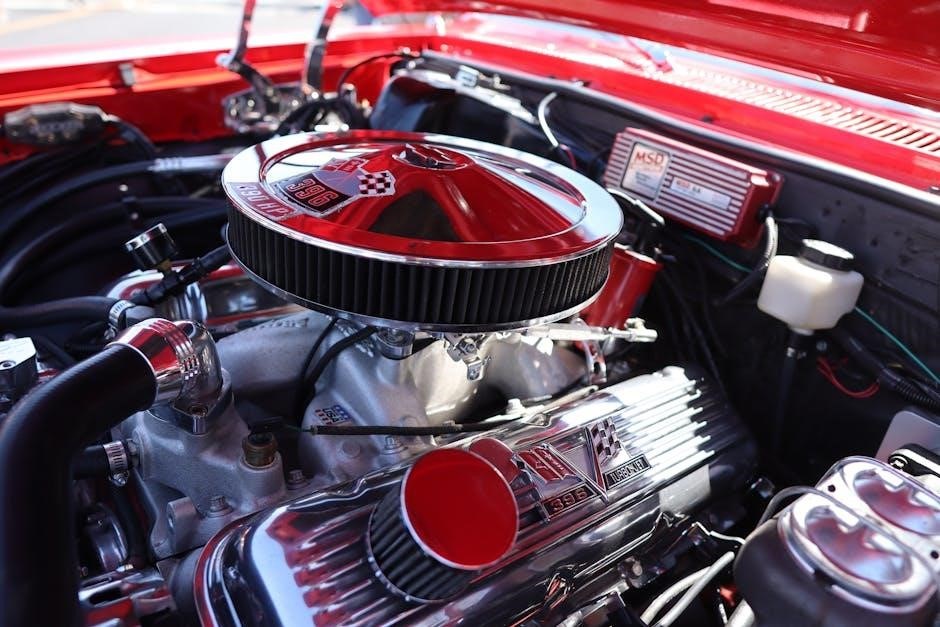
Upgrading the cooling system is vital; a high-capacity radiator and efficient fan setup are essential to manage the increased heat output of the V8 engine.
Radiator Selection
Choosing the correct radiator is paramount for a reliable V8 Pinto swap. Stock Pinto radiators are wholly inadequate for the increased heat generated by a V8 engine, necessitating a significant upgrade. Consider an aluminum radiator with a core thickness of at least 1.5 inches, and ideally 2 inches, for optimal cooling capacity.
Radiator size should be carefully evaluated based on available space within the Pinto’s engine bay. A crossflow radiator generally offers better efficiency in a compact space. Ensure the radiator has sufficient inlet and outlet ports to accommodate your chosen engine and hose routing.
Pay attention to fin density; higher fin density improves heat dissipation but can restrict airflow. A balance must be struck. Research radiators specifically designed for V8 swaps or those with dimensions suitable for the Pinto’s chassis.
Fan and Shroud Installation
Effective cooling relies heavily on a properly matched fan and shroud system. Electric fans are highly recommended for V8 Pinto swaps, offering superior control and eliminating parasitic drag from a mechanical fan. A dual-fan setup provides redundancy and increased airflow, crucial for demanding driving conditions.
The shroud directs airflow through the radiator core, maximizing cooling efficiency. Custom-fabricated shrouds often provide the best fit and performance. Ensure the shroud completely seals against the radiator and engine bay to prevent air bypass.
Fan controllers allow for temperature-based fan activation, optimizing cooling and reducing noise. Consider a PWM controller for precise fan speed adjustment. Proper wiring and relay usage are essential for reliable operation.

Wiring and Electronics
Integrating the V8’s engine management system requires careful wiring harness adaptation, potentially utilizing aftermarket solutions for seamless control and optimal performance.
Engine Management System
Selecting the appropriate engine management system (EMS) is crucial for a successful V8 Pinto swap; Factory ECU options often require extensive modification and may not fully support the desired performance upgrades. Consequently, many builders opt for aftermarket systems like Holley, FAST, or FiTech.
These standalone EMS units offer complete control over fuel delivery, ignition timing, and other critical engine parameters. They typically include wideband oxygen sensor compatibility for precise tuning and data logging capabilities. Careful consideration should be given to the EMS’s features, compatibility with the chosen engine, and ease of use.
Proper calibration is paramount; professional dyno tuning is highly recommended to maximize power and ensure engine reliability. The EMS will dictate the wiring complexity, so research thoroughly before committing to a specific system.
Wiring Harness Integration
Integrating the V8 engine’s wiring harness into the Pinto’s existing electrical system presents a significant challenge. A complete standalone harness, tailored to the chosen engine and EMS, is generally the most reliable approach. Modifying the factory harness is possible, but demands extensive knowledge and carries a higher risk of issues.
Carefully label and document all connections during disassembly. Key considerations include power supply, ignition, fuel pump control, and sensor integration. Ensure adequate wire gauge for all circuits to prevent voltage drop and overheating.
A well-organized and properly fused wiring setup is essential for safety and long-term reliability. Professional assistance may be beneficial, especially for those unfamiliar with automotive electrical systems.
Final Steps and Testing
Post-installation, verify fluid levels, meticulously check all connections, and perform an initial start-up, followed by thorough road testing and precise tuning.
Fluid Checks and Top-offs
Before the initial engine start, a comprehensive fluid check is paramount. Verify the oil level using the dipstick, ensuring it falls within the recommended range for your chosen V8 engine. Inspect the coolant level in both the radiator and the overflow tank, topping off as needed with the correct coolant mixture.
Next, carefully examine the power steering fluid reservoir, adding fluid if low. Don’t forget the transmission fluid; check the level with the engine running and in park, following the manufacturer’s specifications. Finally, inspect the brake fluid reservoir, ensuring adequate levels for safe operation. Addressing these fluid levels proactively prevents potential damage during the initial start-up and testing phases.
Initial Engine Start-up
With all fluids topped off and connections verified, prepare for the initial engine start. Ensure the battery is fully charged and securely connected. Turn the ignition key to the “on” position, allowing the fuel pump to prime the system – listen for the pump to activate. Then, crank the engine, observing for any unusual noises or warning lights.
Monitor the oil pressure gauge immediately after start-up; it should rise quickly. Allow the engine to idle, closely watching the temperature gauge. Be prepared to shut it down instantly if any issues arise, such as excessive smoke, knocking, or overheating. A short initial run is crucial for identifying potential problems before road testing.
Road Testing and Tuning
Following a successful initial start-up, begin cautious road testing in a safe, controlled environment. Start with short drives, gradually increasing distance and speed while monitoring all gauges – temperature, oil pressure, and fuel levels. Pay close attention to the engine’s performance, noting any hesitation, misfires, or unusual sounds.
Fine-tuning the engine management system is vital for optimal performance and reliability. Adjust fuel maps and ignition timing based on observed data and driving conditions. Consider utilizing a dynamometer for precise tuning. Address any drivability issues promptly, ensuring a smooth and responsive driving experience. Remember, proper tuning maximizes power and minimizes the risk of engine damage.